
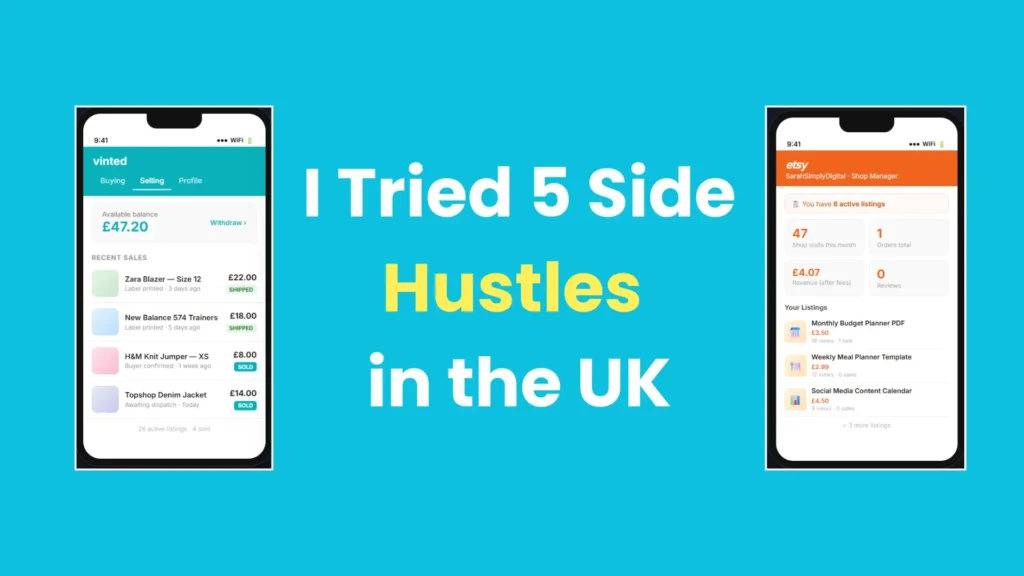
Let me be upfront from the start: I’m not going to tell you I made £5,000 in my first month. I didn’t. Nobody I know personally has, and if they’re claiming that on YouTube, I’d take it with a sizable pinch of salt.
What I will tell you is what actually happened when I spent the better part of 2025 into early 2026 trying to build a side income around a full-time job. The honest version, not the highlight reel.
Why I Even Started Looking
The cost of living in the UK right now is genuinely difficult. My rent in the East Midlands went up £120 a month at my last renewal, energy bills have calmed down slightly but not by much, and I started noticing that by the third week of the month, I was being more careful with what I was spending than I’d like to be.
I’m not in a financial crisis. But I’m also not comfortable, and that gap between “fine” and “comfortable” is exactly where a lot of us sit.
I work a standard 9-to-5 in admin — not glamorous, not badly paid, but there’s no obvious route to a salary jump anytime soon. So in spring 2025, I decided to properly try some of the side hustle ideas I’d been bookmarking and half-heartedly researching for two years.
Here’s what happened with each one.
Side Hustle #1 — Selling on Vinted
Time invested:
About 2–3 hours to get started, then 20–30 mins per week.
Money made after 3 months:
Roughly £130.
Would I recommend it?
Yes, as a starting point.
This was the easiest to begin. I pulled out a bin bag and went through my wardrobe properly for the first time in years. I listed about 35 items — a mix of old work clothes, some festival stuff I’d never wear again, a couple of coats, and a few things I’d bought optimistically and never touched.
The first two weeks were slow. Like, painfully slow. I’d uploaded everything, felt proud of myself, and then just… nothing. A few people added things to their favourites but didn’t buy. I think I sold one pair of jeans in the first ten days.
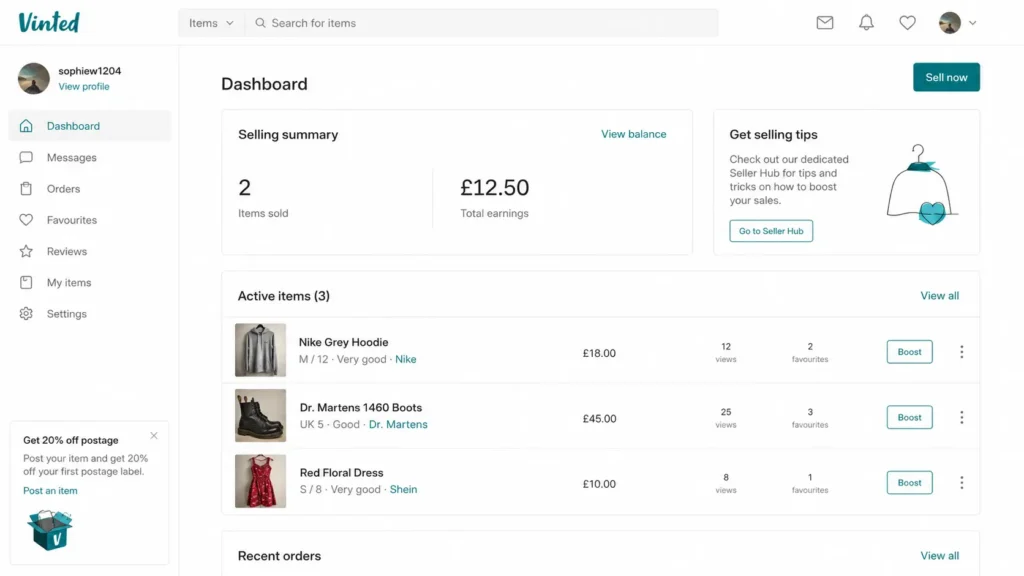
What I learned fairly quickly is that branded stuff sells, and unbranded stuff mostly doesn’t. A basic M&S jumper I’d had for years? Still sitting there. A Zara blazer I’d bought on a whim? Gone within four days. A pair of New Balance trainers I’d barely worn? Sold in under 48 hours.
By month three, I’d made about £130 total after Vinted‘s fees and the cost of postage bags. Not life-changing, but I’d essentially turned clutter into money I didn’t have before. And once my own wardrobe was listed, I started picking up the odd thing in charity shops to relist — though I’ll be honest, I haven’t done that consistently enough to see proper results from it yet.
The frustrating bit: Vinted buyers can be very fussy. I had someone message me asking if a jumper had “any slight bobbling” after I’d described its condition in detail. Just… look at the photos, mate.
Side Hustle #2 — Freelancing (Fiverr and Direct Pitching)
Time invested:
Heavy at first — probably 8–10 hours just setting up.
Money made in the first 2 months:
£45.
Would I recommend it?
Depends entirely on your skills
I can write decently and I’d done a bit of social media management for a local business a few years back. So I figured Fiverr was worth a try — I’d seen enough videos making it sound approachable.
What those videos don’t tell you is that you’re competing with hundreds of other sellers offering similar things, many of them charging almost nothing because they’re based somewhere with a very different cost of living. When you’re trying to charge £15 for a product description and someone else is offering three for £5, it’s a tough start.
I sent probably 15–20 proposals in my first month. I heard back from two people. One of them wanted a sample piece of writing for free “just to test the fit” — I declined that one, politely. The other hired me to write four product descriptions for a small homeware brand, which paid £45.
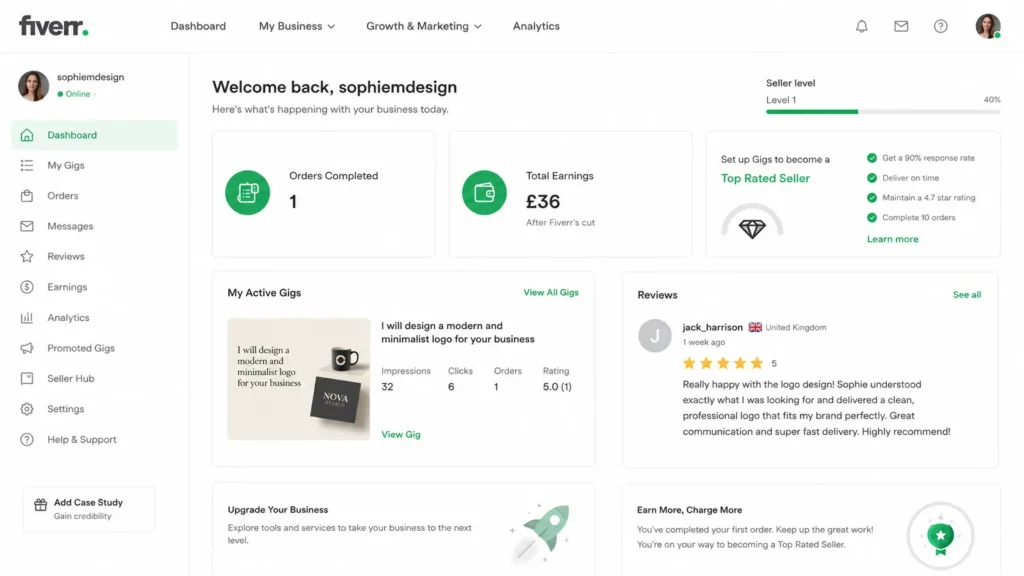
I was thrilled, then a bit deflated when I did the maths. It took me around 3 hours including the brief back-and-forth, the writing itself, and one round of revisions. At that rate, I wasn’t exactly printing money.
Things did start to improve slightly by month three. I got a second client through a Facebook group rather than Fiverr — just someone asking if anyone did copywriting. That felt more natural, honestly. The platform grind is real, and if you go in expecting quick wins you’ll be disappointed.
The thing is, I do think there’s something in freelancing long-term. But it takes longer than anyone on YouTube admits to build momentum.
Side Hustle #3 — Print-on-Demand
Time invested:
About 15 hours total across 6 weeks
Money made:
£0. Genuinely zero.
Would I recommend it for beginners?
Not without a plan for traffic
I’ll keep this one short because there isn’t much to say. I opened a Redbubble account and an Etsy shop, made about 22 designs using Canva and a bit of Photoshop, and uploaded them across both platforms.
Six weeks later, my Etsy shop had 47 total views and zero sales. Redbubble had a handful of visits and one person who added something to their wishlist.
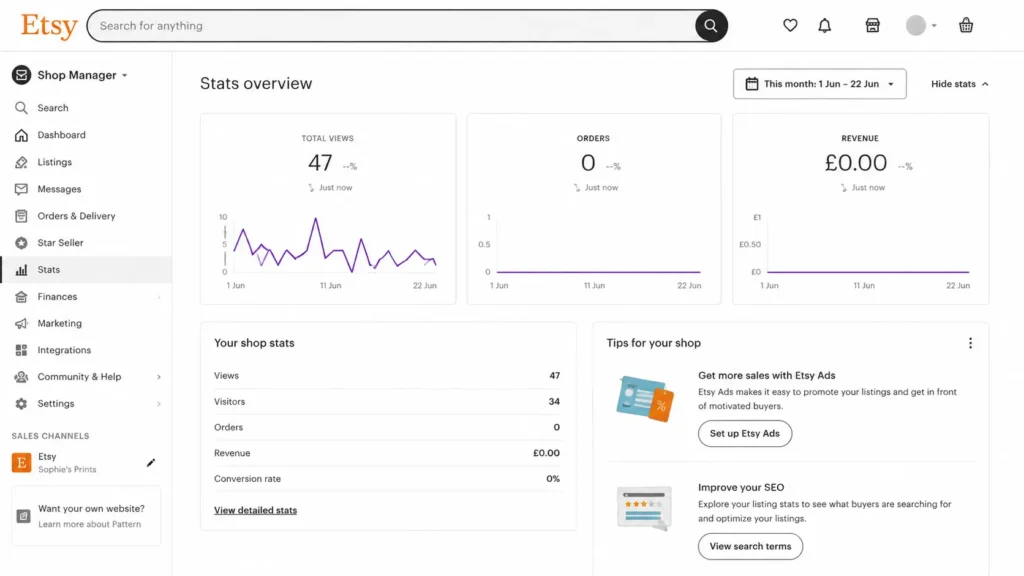
The problem isn’t the concept. Print-on-demand can work. The problem is that without bringing your own audience to your shop — through social media, a blog, SEO, something — you’re just another one of about 4 million listings. Etsy doesn’t hand you customers. You have to generate them somehow.
I knew this was going in, but I think I underestimated how stark the reality would be. If you’re already creating content or have a social following, print-on-demand could work nicely alongside that. If you’re starting from zero, expect a very long runway.
Side Hustle #4 — Delivery Apps
Time invested:
3–4 evenings and one Saturday
Money made:
Around £11.20–£13.50/hour (after petrol)
Would I recommend it?
Yes, if you genuinely need cash now
I signed up for a couple of delivery apps — one food platform, one parcel-based one — and did a few evening shifts and one weekend session. This one is the most straightforward of everything I tried: you work, you get paid.
The earnings were fine. Not amazing after fuel, but real and immediate. I made about £90 over that first week, which felt tangible in a way that none of the other hustles had yet.
The catch, and it’s a significant one, is that doing this after a full day at a desk is absolutely knackering. I got home after a Friday evening shift at around 10:30pm, collapsed on the sofa, and genuinely questioned all my life choices. By Saturday morning I was fine, but it’s not nothing.
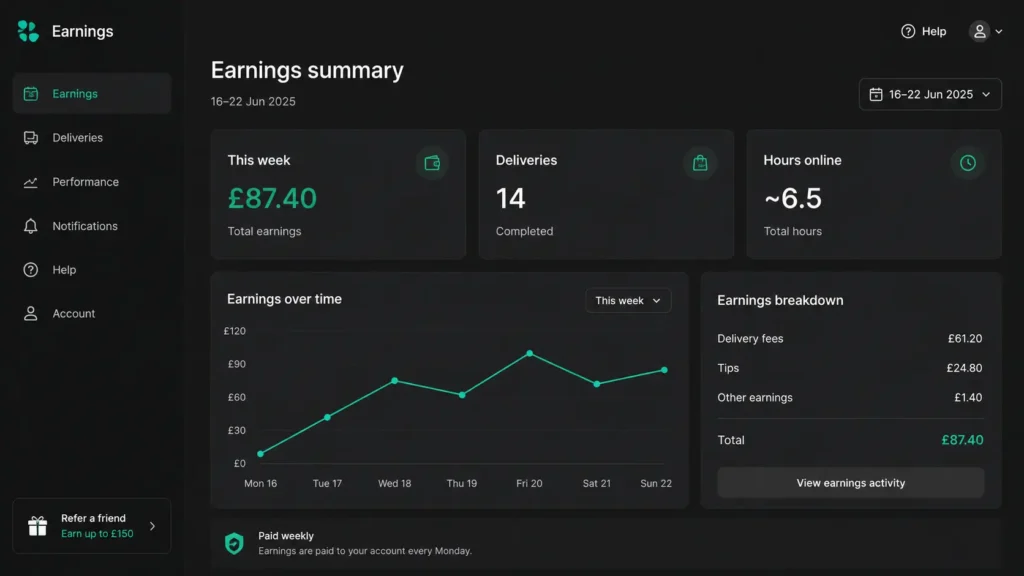
I think delivery work is best treated as a sprint option — when you need a specific amount of money quickly, it’s reliable. As an indefinite second job? I’m not sure your body will thank you for it.
Also worth mentioning: the mileage adds up, and you need to keep records if you want to claim it back through Self Assessment.
Side Hustle #5 — Digital Products
Time invested:
About 10 hours to create, ongoing to market
Money made in the first 2 months:
£18
Would I recommend it?
Yes, but treat it as a long game
This one I started fairly recently and I’m still in the early stages, so take this section with that caveat.
The idea was simple: I made a few Canva templates — a monthly budget planner, a simple meal planning sheet, a social media content calendar — and listed them on Etsy and Gumroad. Things people genuinely search for and use.
Two months in, I’ve made £18. One sale on Etsy, one on Gumroad. The Etsy analytics show my templates have appeared in 94 searches, which is encouraging, but converting searches into sales is a slow process.
What I like about this one is that the work is done once. My budget planner template took me about three hours to make. If I sell it 50 times in the next year, that’s a reasonable passive return on three hours of effort. I just need to improve my listings, maybe make a few short videos showing the templates in use, and be patient.
Of everything I’ve tried, this is the one I’m most quietly optimistic about — precisely because it doesn’t require me to be online at 9pm in the rain.
What Actually Worked Best
Here’s my honest ranking after roughly 9–10 months of messing about:
| Side Hustle | Total Earned | Time Invested | Hourly Rate (roughly) |
|---|---|---|---|
| Delivery Apps | ~£90 in one week | ~7 hours | ~£12.85/hr |
| Vinted | ~£130 over 3 months | Ongoing, light | Variable |
| Freelancing | ~£45 in 2 months | ~10 hours | ~£4.50/hr |
| Digital Products | ~£18 in 2 months | ~10 hours | <£2/hr so far |
| Print-on-Demand | £0 | ~15 hours | £0 |
Delivery apps win on immediate hourly income. No question.
Vinted is the most accessible with almost no barrier to entry.
Freelancing has the most upside long-term but the slowest start.
Digital products feel like the most interesting long-term play.
Print-on-demand needs a strategy I don’t currently have.
Biggest Mistakes I Made (So You Don’t Have To)
- Jumping in without a plan for traffic Print-on-demand completely flopped because I had no audience and no strategy to bring people to my shop. I just… listed things and hoped. That’s not a plan.
- Undercharging on Fiverr to get started I see this advice everywhere — price low to get reviews. Maybe. But I started too low and then found it hard to increase prices with existing clients. Start a bit lower than your ideal, yes. Not so low it’s unsustainable.
- Treating everything as passive Some of these things are more passive than others. None of them are truly “set it and forget it” at the beginning. I lost motivation with print-on-demand partly because I expected it to tick along by itself. It doesn’t.
- Not tracking properly from the start I lost track of exactly how much I’d spent on postage for Vinted in the first month and probably underestimated my true earnings. Get a simple spreadsheet going early.
- Comparison paralysis I spent a lot of time watching YouTube videos of people claiming £2,000 months from the same things I was doing. It made me feel like I was failing rather than just being a normal beginner. Those videos are almost never representative.
Final Verdict — What Would I Actually Tell a UK Beginner?
Start with Vinted. Seriously. There is almost no risk, you need nothing except a phone and some clothes you don’t wear, and you’ll make some money within a few weeks. It’s not going to replace your income, but it gets you used to the idea of earning something on the side and it’s genuinely satisfying to watch things sell.
If you want actual money right now, delivery work is reliable — just factor in the tiredness and the wear on your car.
If you have a marketable skill, freelancing is worth pursuing even though the early months are demoralising. Don’t give up after the first month. It takes time to get your first few clients and then things compound a little.
Digital products and print-on-demand are genuinely viable, but only if you go in understanding that you need a plan for getting eyes on your shop. “Build it and they will come” does not apply on Etsy in 2026.
I haven’t made enough to change my life yet. I’ve made enough to feel like I have some control back, and I’ve learned more in the past nine months about how online earning actually works than I did from two years of passively watching videos about it.
That feels like something worth building on.
If you’re researching side hustle ideas or looking for side hustle ideas UK-specific to your situation, I’d say the key is just to start with the lowest-barrier option available to you right now. Don’t wait until you have the perfect strategy. I wish someone had told me that sooner.
Disclaimer:
Earnings mentioned are my own personal experience and results will vary. Some links in this post may be affiliate links. All figures are approximate.
Best Budgeting Apps of 2026 — Free, Paid, and Worth Your Time
Looking for the best budgeting app in 2026? Compare top...
Read More
How to Start Budgeting: Top 10 Methods for Beginners in 2026
From the 50/30/20 rule to automating savings — these proven...
Read More
Earn ₹1000 Per Day in India: Real Ways to Make ₹1K Daily with AI
Stop guessing, start earning. Here are 10 verified ways to...
Read More
Best Gemstones for Financial Success According to Vedic Astrology
Discover the best gemstones for financial success in Vedic astrology,...
Read More
15 Best ChatGPT Alternatives in 2026: Free & Paid AI Tools
ChatGPT isn't the only AI worth using anymore. From Claude...
Read More
8 Best Money-Saving Apps of 2026
Which money-saving app suits you? Compare Cleo, Acorns, YNAB &...
Read More