
If your money disappears before the month even ends, you’re not alone, and the fix isn’t a spreadsheet you’ll abandon in two weeks. The right tool can actually keep you on track. In this guide, we’re breaking down the best budgeting apps of 2026, comparing free and paid options, so you can pick one that fits your life instead of fighting it.
Why You Need a Budgeting App in 2026
Prices keep climbing, subscriptions pile up quietly, and most people genuinely don’t know where their paycheck goes by the 20th of the month. That’s exactly the gap that budgeting apps are built to close. A good app links to your bank, sorts your spending automatically, and shows you in plain numbers whether you’re saving or sinking. You stop guessing and start deciding.
The smartest move isn’t picking the most popular app. It’s picking the best budget app that matches how you actually manage money, whether that’s strict envelope-style budgeting, simple tracking, or hands-off automation. If you want to start from the basics of budgeting check our guide on Top 10 methods of budgeting for beginners in 2026.
What Makes the Best Budgeting App?
Before we dive into the rankings, here’s what really separates a great app from a forgettable one:
- Bank syncing that works — manual entry kills consistency fast.
- Clear categories — you should understand your spending in seconds, not minutes.
- Realistic pricing —free tiers should be useful, not crippled.
- Goal tracking — savings goals, debt payoff, or joint budgets.
- Security — bank-level encryption, no exceptions.
With that checklist in mind, here are the best budgeting apps for 2026, clearly split into free and paid picks.
Best Free Budgeting Apps of 2026
1. Monarch Money (Free Trial, Then Paid)
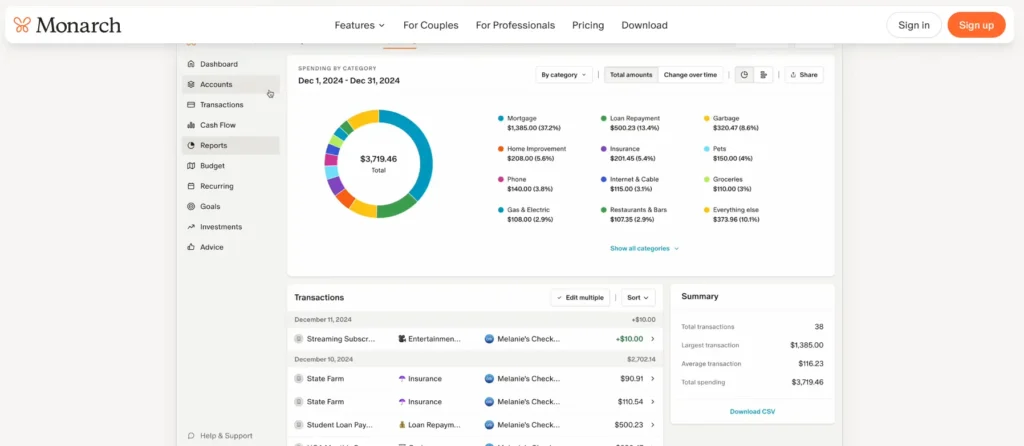
Monarch has quickly become a favorite replacement for older tools that shut down. It offers clean visuals, shared household budgets, and investment tracking in one dashboard. The free trial is generous enough to test before committing, which makes it one of the best budget apps for couples who want everything in one place without juggling two separate logins.
2. PocketGuard
PocketGuard’s biggest strength is simplicity. It calculates your “In My Pocket” number, basically what’s safe to spend after bills, goals, and obligations are covered. If you’ve ever asked yourself ynab vs pocketguard, the short answer is: YNAB demands more manual control, while PocketGuard automates the decision-making for you. For beginners, that’s a real advantage.
3. Rocket Money
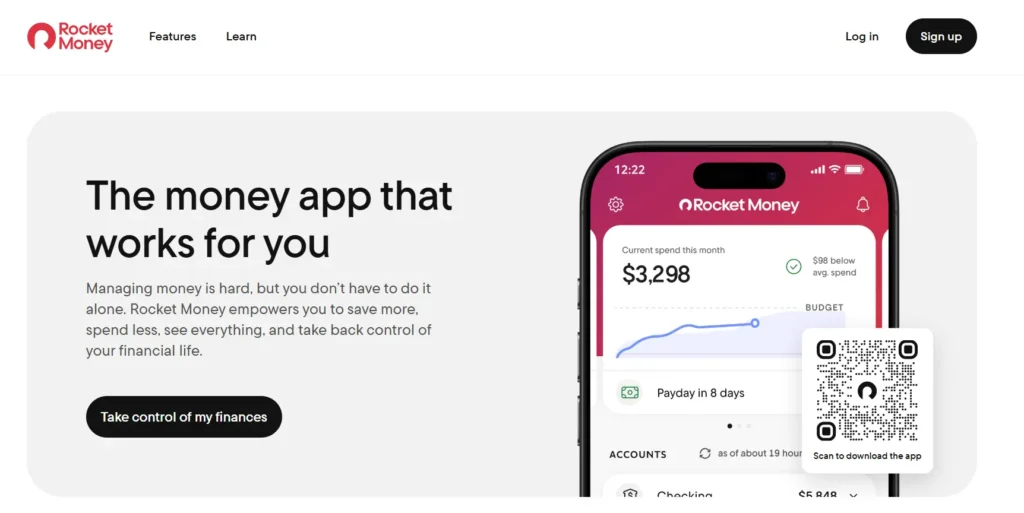
Rocket Money built its reputation on bill negotiation and subscription cancellation, but its budgeting features have matured a lot. It flags forgotten subscriptions, tracks spending trends, and even works to lower recurring bills automatically. It’s a strong pick if your main problem is leaking money through subscriptions you forgot existed.
4. Goodbudget
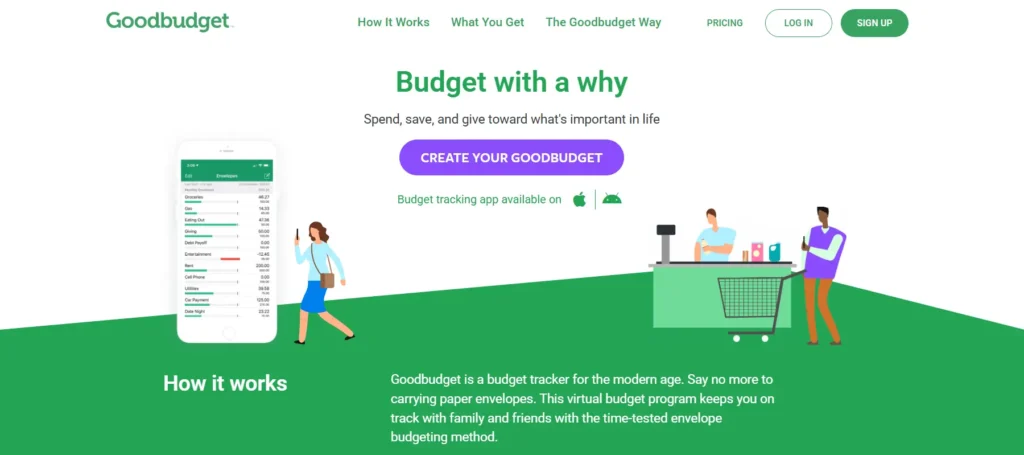
Goodbudget brings the old envelope-budgeting method into a digital, shareable format. It doesn’t sync with your bank automatically in the free version, which means more manual work, but it’s one of the most effective tools for people who want hands-on control and accountability, especially couples splitting a household budget.
Best Paid Budgeting Apps of 2026
1. YNAB (You Need A Budget)
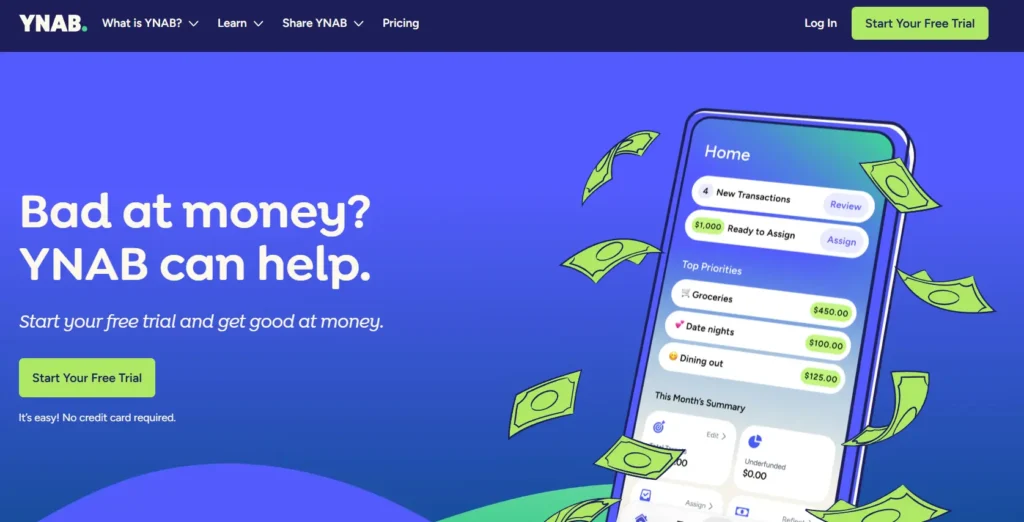
There is an excellent reason why YNAB continues to be one of the top names in personal finance. The zero-based budgeting method used by it calls for that every dollar be assigned a role, which although sounds a bit stringent actually results in a transformation of one’s spending habits in just a few months. It is not the least expensive solution, and there is a rather steep learning curve, Yet if the user is determined to get rid of the paycheck to paycheck cycle then this product is very often placed in the top budgeting software picks.
2. Monarch Money (Paid Tier)
When the trial is over, a paid plan with Monarch opens up full investment tracking, the ability to create custom reports, and unlimited account syncing. The company sounds itself as a pretty close replacement for the apps that have ceased, and for many old users of mint vs monarch, Monarch has become the obvious next step because of its similar design and better automation.
3. Tiller
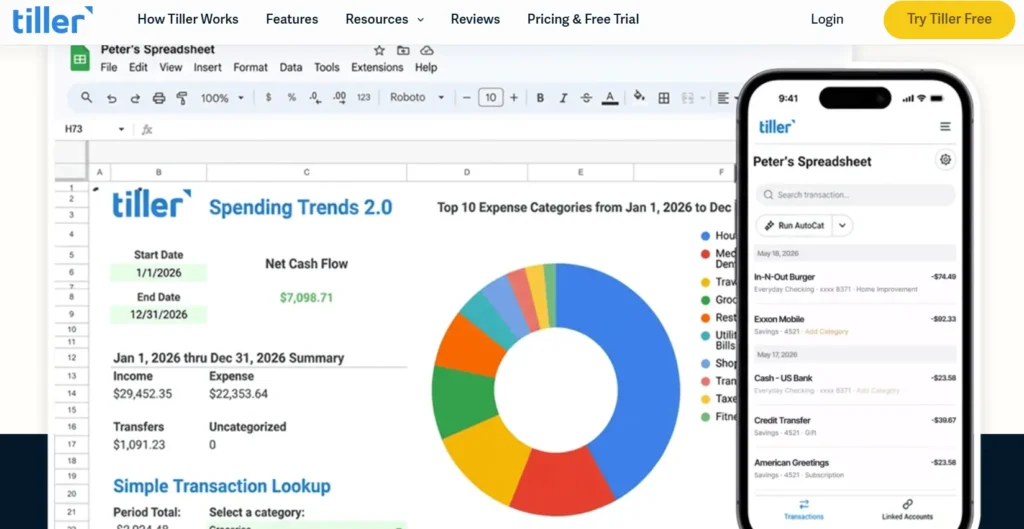
Tiller is built for spreadsheet lovers who still want automation. It pulls your transactions directly into Google Sheets or Excel, giving you full customization without manual data entry. It’s not for everyone, but for analytical users who want total control over formulas and categories, it’s genuinely one of the best budget tools on the market.
4. Simplifi by Quicken
Simplifi offers a neat, quick interface and powerful spending guards and budgets that you can freely modify. It is a good compromise between YNAB’s rigidity and PocketGuard’s ease. What’s more, it is a really good expense tracking app that iPhone users usually like because of its great mobile design.
Free vs Paid: Which Should You Choose in 2026?
Free apps are great if your finances are relatively simple: one income source, predictable bills, and no complicated investment tracking. They’re also the smart starting point if you’re not sure budgeting apps will even stick for you long-term.
Paid apps earn their cost when your situation gets more layered, multiple accounts, shared household budgets, investment tracking, or debt payoff plans. The subscription fee, usually $5 to $15 a month, often pays for itself the first time it catches a forgotten charge or stops an impulse buy.
If you’re still undecided, start with a free tool for 30 days. If by any chance you decide that you really want more comprehensive reports or additional automation, purchasing a subscription to one of the best budgeting apps with a paid tier will be a decision that you enjoy rather than one that you do because you have to.
Quick Comparison Table
App | Type | Best For |
PocketGuard | Free/Paid | Beginners who want automation |
Goodbudget | Free | Envelope budgeting, couples |
Rocket Money | Free/Paid | Cutting subscriptions and bills |
YNAB | Paid | Serious zero-based budgeting |
Monarch Money | Free trial/Paid | All-in-one household finance |
Tiller | Paid | Spreadsheet customization |
Simplifi | Paid | Mobile-first simple tracking |
Final Thoughts
There’s no single best budget app that works for everyone, and that’s actually good news. It means you can match the tool to your habits instead of forcing your habits to match a tool. Start free, track your spending honestly for a month, and only upgrade once you know exactly what feature you’re missing. That one decision, picking software that actually fits your life, is often the real difference between sticking to a budget and quietly giving up on one by February.
Frequently Asked Questions
Q1. What is the best budgeting app for 2026?
Monarch Money and YNAB are excellent choices right now, based on whether you want to rely on automation or prefer hands-on control.
Q2. Are there any free budgeting apps?
Yes, In fact PocketGuard, Goodbudget, and Rocket Money provide really useful features in their free tiers without forcing upgrades.
Q3. Which one is better: Ynab or PocketGuard?
People who want complete manual control will find YNAB better, whereas PocketGuard will be easier for daily use as it automatically limits spending.
Q4. Is Monarch a good Mint replacement?
The answer is yes. Monarch is thought by many to be the most similar and well-made replacement for Mint users who have switched.
Q5. Do budgeting apps work for couples?
Of course, Goodbudget and Monarch are examples of apps that have been designed mainly for shared household budgeting and joint goal setting.
How to Start Budgeting: Top 10 Methods for Beginners in 2026
From the 50/30/20 rule to automating savings — these proven...
Read More
Earn ₹1000 Per Day in India: Real Ways to Make ₹1K Daily with AI
Stop guessing, start earning. Here are 10 verified ways to...
Read More
How To Earn Money From Home In India: 10 Proven Ways In 2026
Most "work from home" opportunities in India are traps. Here...
Read More
How to Start Budgeting: Top 10 Methods for Beginners in 2026
From the 50/30/20 rule to automating savings — these proven...
Read More
Why Big Tech Companies Are Investing in Fintech Startups in 2026
Discover why big tech companies are investing in Fintech Startups...
Read More
Who Is Kunal Shah? The Entrepreneur Behind CRED’s Rise
He dropped out of NMIMS, sold FreeCharge for ₹2,800 crore,...
Read More
Meta Invests $900 Million in CRED: What the Deal Means for India’s Fintech Future
Meta just bought a 20% stake in CRED for $900M....
Read More