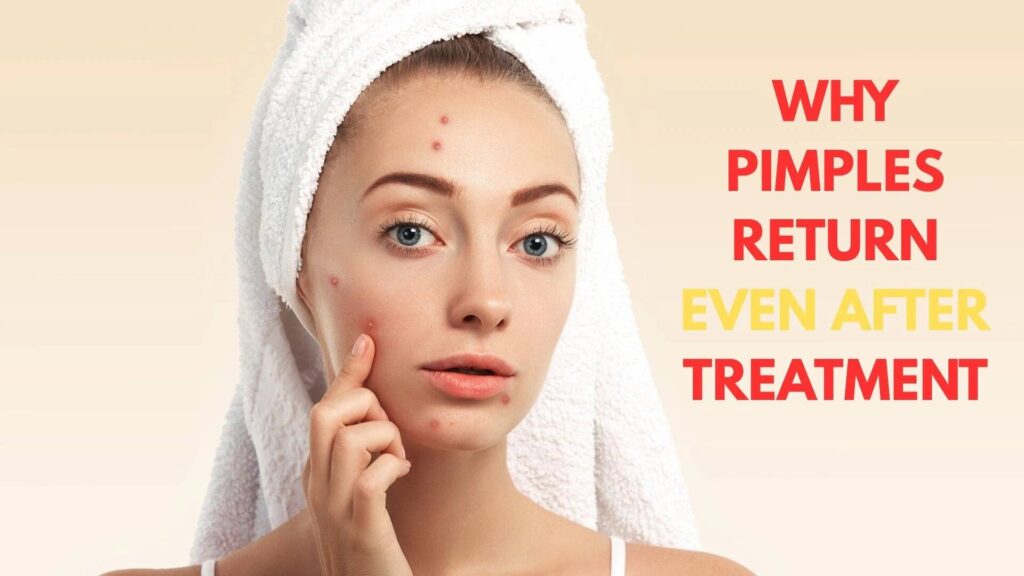
Acne recurrence is one of the most frustrating realities millions of people face worldwide. The causes of acne run deeper than surface-level bacteria or a missed wash — and if you’ve ever wondered why pimples keep returning even after treatment, the answer lies in how most medications actually work.
According to dermatological research, 85% of people between the ages of 12 and 24 experience acne at some point — and nearly 40% continue to battle breakouts well into their 30s and beyond. Most striking of all, roughly 1 in 5 patients who complete a treatment course see significant acne recurrence within a single year of stopping. These numbers make one thing very clear: clearing acne once is not the same as curing it.
Most Acne Treatments Control — They Don’t Cure
Here’s what your dermatologist might not spell out clearly enough: benzoyl peroxide, topical retinoids, and antibiotic gels are all management tools. They reduce oil production, kill acne-causing bacteria (C. acnes), and prevent pore clogging while you use them. The moment you stop? Your skin reverts to its natural behaviour — pores clog again, bacteria repopulate, and inflammation returns.
Think of it like a leaking tap. Medication puts a cloth over the leak. Remove the cloth, and the drip returns. The plumbing — your skin’s oil glands, hormonal sensitivity, and cellular turnover — hasn’t changed at all.
Why Acne Returns at the Same Spot Every Time
Ever notice your breakouts hit the same cheek, the same chin, the same forehead crease — again and again? That’s not a coincidence. Certain pores are structurally wider or more prone to sebum buildup due to genetics and local hormonal receptor density. Hormonal changes, such as increased cortisol levels, the menstrual cycle, or insulin resistance, repeatedly affect the same vulnerable hair follicles. This creates a consistent pattern of acne returning in specific areas. Moreover, post-inflammatory hyperpigmentation and tiny scars in previously affected areas can make it easier for dead skin cells to build up, which means the same spots are likely to develop acne again.
Why Does Acne Hurt? The Science Behind the Inflammation
Painful acne forms when there is inflammation within the deeper layers of your skin. As your body’s immune system responds to an infection caused by C. acnes bacteria, white blood cells will release inflammatory chemicals that squeeze against your nerves. The more deeply infected and inflamed your skin becomes, the more painful you will experience your pimples to be. This is another reason why picking at your skin hurts so much. Covering active blemishes with a hydrocolloid pimple patch can help reduce the temptation to touch or squeeze them.
The One and Only Exception is: Isotretinoin
Isotretinoin, often referred to by the brand name Accutane, is currently the only acne medication that has been clinically demonstrated to treat the actual cause of acne and not just its symptoms. By permanently reducing sebum (oil gland size), speeding up cell production in your skin, and drastically decreasing the levels of C. acnes colonies, it clears acne for good.
Unfortunately, it comes with several serious side effects such as an increased risk of developing depression or mood swings, the risk of causing liver damage, as well as causing birth defects, which is why isotretinoin should only be used under professional medical supervision.
How to Clear Acne Completely: A Realistic Plan
- Don’t stop treatment the moment skin clears — maintain your topical regimen for at least 3–6 months after visible clearing.
- Use non-comedogenic SPF daily — sun damage worsens post-acne scarring and significantly slows skin healing.
- Address hormonal triggers — speak to a doctor about spironolactone (for women) or dietary shifts that reduce insulin spikes
- Stick to a consistent gentle cleanser — over-washing strips the skin barrier and triggers rebound oil production.
- Avoid frequent product switching — skin needs 8–12 weeks to show real results from any new treatment. For individual breakouts that still appear during treatment, most of the the dermatologists suggest a pimple patch to keep the place safe from picking and to lessen the swelling.
- Consider in-office options for stubborn cases: chemical peels, LED light therapy, or corticosteroid injections for deep cysts.
Read Also: ‘ Is it cold sore or pimple on your face ? ‘
Frequently Asked Questions
Q1. Why does acne come back after stopping antibiotics?
Antibiotics that are either oral or topical operate through reducing the number of C. acnes bacteria on and within your skin. Once you discontinue them, bacterial levels gradually rebuild — especially if there are no other factors keeping sebum production or skin cell turnover in check. Another issue to consider is the development of antibiotic resistance, whereby repeated use of the drugs reduces their efficacy. Dermatologists now often recommend pairing antibiotics with a topical retinoid so that results are maintained after the antibiotic course ends.
Q2. Can diet cause acne recurrence?
Emerging research points to a real link between high-glycaemic diets, dairy consumption, and acne flares in susceptible individuals. Foods that spike insulin — white bread, sugary drinks, processed snacks — can increase androgen activity and sebum production, recreating the internal conditions that allow acne to return. Although diet alone is not usually a cure-all for acne, incorporating low-GI dietary changes along with medications will help decrease its occurrence, especially with hormonally-driven acne that forms around the jaw and chin.
Q3. Is it normal for acne to return after isotretinoin?
For most patients, acne does not return after completing a full course of isotretinoin — making it the closest thing to a cure currently available. However, a subset of patients (estimates range from 15–30%) do experience some degree of recurrence, particularly if the cumulative dose was insufficient or if strong hormonal factors like polycystic ovary syndrome continue driving oil production. In such cases, a second course or a long-term low-dose maintenance protocol may be recommended by a dermatologist.
Q4. How long should I continue acne treatment to prevent it coming back?
It all depends on your individual case because there is no one-size-fits-all approach to treatment time frame. As a general rule, dermatologists recommend continuing maintenance therapy (usually a topical retinoid, with or without benzoyl peroxide) for at least 6–12 months after your skin is clear, then reassessing. Some people maintain clear skin with a once-daily application indefinitely; others may be able to taper off gradually. The key is not stopping cold turkey the moment skin looks good — that’s typically when recurrence happens fastest.