
Astrology
Why Emerald Cut Engagement Rings are the best choice for Every Bride
By Admin • May 5, 2026 • 5 min read
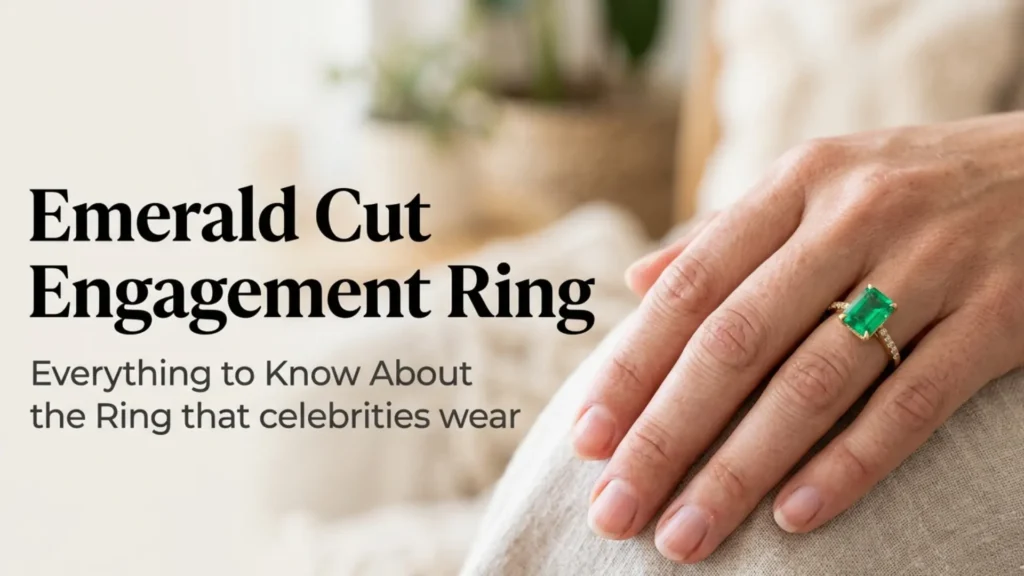
Some rings whisper. Some rings command the room. Emerald cut engagement rings do something far more rare — they simply endure. Decade after decade, trend after trend, this long, stepped, mirror-like cut continues to sit on the fingers of brides who refuse to be rushed by fashion.
If you have been drawn to the cool geometry of an emerald cut and want to understand exactly what you are looking at — the stone, the shape, the setting, and even the deeper meaning behind the gemstone — this guide covers it all. From the structural details of the cut to the astrological power of the emerald gemstone, consider this your complete, honest resource before making one of the most meaningful purchases of your life.
What Is an Emerald Cut Diamond? The Cut That Changed Fine Jewellery
Most people who fall in love with an emerald cut cannot immediately explain what makes it different. They just know it feels different. More composed. More considered. More grown-up, somehow.
The reason comes down to how the stone is actually cut.
An emerald cut diamond is a step-cut diamond, which means its facets are arranged in long, flat, parallel rows rather than the triangular, kaleidoscopic pattern of a round brilliant cut. Instead of breaking light into dozens of scattered flashes and rainbows, the emerald cut reflects light in broad, sweeping sheets — a visual phenomenon known in the trade as the “hall of mirrors” effect.
The result is a diamond that does not dazzle in the way we have been trained to expect. It does something more intimate. It pulls you in.
Shape, Proportions, and the Details That Matter
Structurally, an emerald cut diamond is a rectangle with clipped, bevelled corners — giving it an octagonal outline that protects the edges from chipping while adding to its architectural elegance. The ideal length-to-width ratio sits between 1.35 and 1.50 for a classic rectangular appearance. Go below 1.20 and you approach the square Asscher cut. Push past 1.60 and the stone starts to look unusually long and narrow.
The large, flat table facet — the top surface of the diamond — acts almost like a window into the stone. This is both the emerald cut’s greatest strength and its most demanding feature. Because there is nowhere to hide, clarity matters enormously. Gemologists widely recommend a minimum of VS1 clarity (Very Slightly Included) for an emerald cut diamond if you want an eye-clean stone. At lower clarity grades, inclusions become visible to the naked eye far more easily than they would in a brilliant-cut stone.
Colour Grade Considerations
Just as the open table exposes inclusions, it also makes colour more apparent. While a round brilliant can mask faint yellow tints through its brilliance, the emerald cut displays colour more transparently. For the clearest, iciest appearance, aim for a colour grade of F, G, or H on the GIA scale. If you prefer a warmer tone — or if you are choosing a yellow gold or rose gold setting — an I or J colour can actually look stunning and intentional.
The Rise of the Emerald Cut: A Brief History Worth Knowing
Understanding where the emerald cut comes from adds a layer of meaning to wearing one.
The cut was first developed by lapidaries — stone-cutting craftsmen — specifically to shape rough emerald gemstones without losing too much material. The natural hexagonal crystal structure of emerald meant that rectangular, step-cut facets were the most efficient and least risky approach. The style was later adapted for diamonds.
It reached peak cultural prominence during the Art Deco movement of the 1920s and 1930s, when architects, artists, and designers across Europe and America rejected Victorian ornament in favour of clean lines, bold geometry, and deliberate symmetry. The emerald cut was the perfect jewellery expression of that philosophy.
By the mid-20th century, iconic figures — Grace Kelly, Elizabeth Taylor, Jacqueline Kennedy — were wearing rectangular step-cut stones. Today, the emerald cut has experienced a powerful revival, worn by a new generation that values quiet luxury, intentional design, and stones with genuine character over maximum commercial sparkle.
What Is an Emerald Gemstone? The Stone, the Colour, and the Cosmic Meaning
An emerald gemstone is a variety of the mineral beryl — the same mineral family that includes aquamarine (blue-green) and morganite (peachy-pink). What sets emerald apart is its exceptional, vivid emerald green colouration, produced by trace amounts of chromium and, in some cases, vanadium within the crystal structure.
The best emeralds in the world come from Colombia, particularly the Muzo and Chivor mines, and then from Zambia, Brazil, Zimbabwe and Ethiopia. Colombian emeralds are prized for their warm, slightly yellowish-green hue. Zambian emeralds tend toward a cooler, slightly bluish-green tone.
Most natural emerald gemstones contain inclusions — the gem trade calls them jardin (French for “garden”) — and they are considered a natural and accepted characteristic of the stone, unlike in diamonds where clarity is paramount.
The Astrological Power of the Emerald Gemstone
In Vedic astrology (Jyotish), the ancient and highly sophisticated planetary gem system of India, the emerald gemstone is the prescribed stone for Mercury (Budha Graha). Mercury governs intelligence, logic, communication, business, commerce, nervous system health, and analytical ability. Wearing an emerald ring on the little finger of the right hand — set in gold or silver — is traditionally believed to activate and strengthen Mercury’s benefic influence in one’s birth chart.
Astrologers typically recommend an emerald ring for individuals belonging to Mercury-ruled ascendants — primarily Gemini (Mithun Lagna) and Virgo (Kanya Lagna) — as well as for those currently running a Mercury planetary period (Budha Mahadasha or Budha Antardasha). People say that the stone can help you think more clearly, speak and write better, remember things better, learn better, and do well in Mercury-related fields.
Emerald is the birthstone for May in Western astrology and is linked to the zodiac sign Taurus. People have long thought of it as a stone of love, loyalty, and new beginnings. Its bright emerald green color is a natural extension of this, as it looks like spring.
An emerald ring is one of the most meaningful engagement ring choices a couple can make because it has both astrological meaning and natural beauty. This is especially true if Mercury is a strong or well-placed planet in either partner’s natal chart.
A note of caution: Vedic gemstone prescriptions are highly personalised. An emerald gemstone worn without proper astrological assessment can sometimes produce neutral or mixed results. Always consult a trained and experienced Jyotish astrologer before wearing any planetary gemstone for therapeutic or astrological purposes.
Best Settings for Emerald Cut Engagement Rings
The setting is not just a mechanical housing for the stone. For an emerald cut engagement ring, it is part of the design conversation. Get it right, and the ring becomes architectural. Get it wrong, and even a beautiful stone can look lost or cluttered.
Classic Solitaire
The most popular choice, and for good reason. A four-claw or bezel solitaire puts the entire focus on the stone’s step-cut geometry. It works in platinum, white gold, yellow gold, and rose gold. The bezel setting, which wraps a thin metal border around the stone’s perimeter, offers the most protection and a sleek, modern edge.
East-West Solitaire
An increasingly popular variation where the emerald cut is set horizontally across the finger rather than vertically. This modern orientation gives the ring an unexpected, fashion-forward quality while keeping the design clean and minimal.
Three-Stone Setting
Flanking the emerald cut centre stone with tapered baguette diamonds is the quintessential Art Deco combination. The rectangular baguettes mirror the geometry of the centre stone while adding layered brilliance to the sides. Trillion-cut or half-moon side stones are softer alternatives that add contrast without competing.
Halo Setting
A ring of small brilliant-cut diamonds surrounding the emerald cut creates striking contrast between the centre stone’s calm, measured reflections and the surrounding ring of intense sparkle. This setting also makes the centre stone appear significantly larger — typically adding the visual appearance of 0.3 to 0.5 carats.
Vintage Milgrain or Filigree Band
Pairing an emerald cut solitaire with a hand-engraved or milgrain-edged band leans fully into the Art Deco and Edwardian aesthetic. This combination is ideal for anyone who loves antique jewellery and wants a ring that feels like it carries history.
Emerald Cut Engagement Rings: Metal Guide
The metal you choose changes the entire personality of the ring.
Platinum enhances the cool, glassy quality of the emerald cut. It is the most durable and hypoallergenic choice and maintains its colour permanently without replating.
White gold looks a lot like platinum, but it’s cheaper. To keep its bright white finish, it needs to be replated with rhodium every one to two years.
Yellow gold looks warm and romantic next to a white diamond in an emerald cut. It looks especially beautiful with warmer color grades (H–J). It pairs beautifully with an Art Deco or vintage aesthetic.
Rose Gold is the softest, most romantic choice. An emerald cut diamond set in rose gold reads as modern and feminine simultaneously.
Caring for Your Emerald Cut Engagement Ring
Whether your ring centres on a diamond or an emerald gemstone, the maintenance approach differs significantly.
For emerald cut diamonds:
Clean weekly using warm water, a drop of dish soap, and a soft-bristled toothbrush. Stay away from harsh chemicals and make sure a professional checks the prongs once a year. The emerald cut has beveled corners that make it less likely to chip than pointed cuts like marquise or pear.
For emerald gemstones:
Natural emeralds are almost always treated with cedar oil or resin to improve clarity and appearance. This means they should never be cleaned in ultrasonic or steam cleaners, as heat and vibration can remove the treatment and damage the stone. Use only a soft, damp cloth. Re-oiling by a qualified jeweller every few years is recommended for high-use rings.
Store both types of rings separately, wrapped in soft cloth, to prevent scratching from other jewellery.
Frequently Asked Questions
Q1. Do emerald cut engagement rings suit all hand types?
Yes, although they are particularly flattering on hands with shorter or wider fingers, as the long rectangular shape makes the fingers look longer. The effect is subtle but noticeable. Brides with long slim fingers can wear any length to width ratio and look stunning, but may prefer a slightly squarer ratio (around 1.30) for balance.
Q2. Is an emerald gemstone strong enough to be worn every day as an engagement ring?
On the Mohs hardness scale, an emerald gemstone gets a score of 7.5 to 8. This means it is fairly hard, but it is easier to scratch and chip than a diamond, which gets a score of 10.
Q3. How does the sparkle of an emerald cut compare to that of a radiant cut?
These two cuts are often compared because both are rectangular, but they are fundamentally different. A radiant cut uses brilliant-cut faceting — similar to a round brilliant — producing intense, high-contrast sparkle and fire. An emerald cut uses step-cut faceting, producing the calm, mirror-like “hall of mirrors” reflection. The radiant cut is louder and more visually dynamic. The emerald cut is quieter, more architectural, and more refined. An emerald engagement ring can last a lifetime if you take care of it.
See Also
Related Posts

Best Budgeting Apps of 2026 — Free, Paid, and Worth Your Time
Looking for the best budgeting app in 2026? Compare top...
Read More
How to Start Budgeting: Top 10 Methods for Beginners in 2026
From the 50/30/20 rule to automating savings — these proven...
Read More
Why Big Tech Companies Are Investing in Fintech Startups in 2026
Discover why big tech companies are investing in Fintech Startups...
Read MoreCategory
Recent Posts
Best Budgeting Apps of 2026 — Free, Paid, and Worth Your Time
Looking for the best budgeting app in 2026? Compare top...
Read MoreHow to Start Budgeting: Top 10 Methods for Beginners in 2026
From the 50/30/20 rule to automating savings — these proven...
Read MoreWhy Big Tech Companies Are Investing in Fintech Startups in 2026
Discover why big tech companies are investing in Fintech Startups...
Read More
Who Is Kunal Shah? The Entrepreneur Behind CRED’s Rise
He dropped out of NMIMS, sold FreeCharge for ₹2,800 crore,...
Read More