
Health
Lip Pimple vs Cold Sore: Can You Get a Pimple on Your Lip?
By Admin • April 13, 2026 • 5 min read
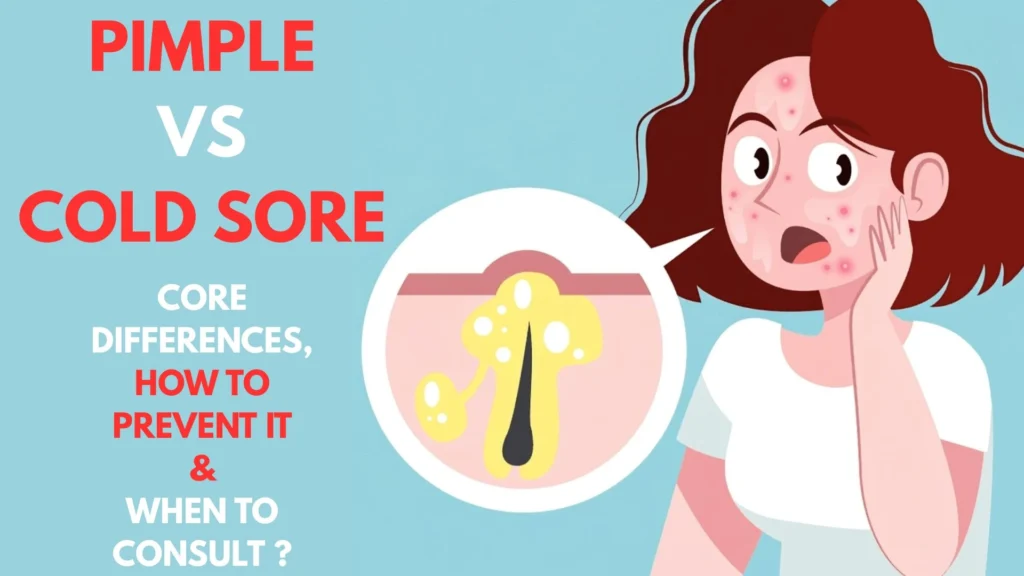
Waking up to a sore, red bump near your mouth is never a welcome surprise. Whether it sits on the lip itself or along the border, your first instinct is usually to figure out what it is. The two most common culprits are a lip pimple and a cold sore — and while they can look nearly identical in the early stages, they are very different conditions with very different causes and treatments.
This guide walks you through everything you need to know: how to tell a pimple from a cold sore, what herpes on the lip looks like, where each type of blemish forms, and how to get rid of a pimple on your lip quickly and safely.
Can You Get a Pimple on Your Lip?
Yes — but with an important caveat. True pimples (acne) never form directly on the lip surface itself because lips do not have sebaceous (oil-producing) pores. However, the skin immediately around the lip — the lip line, the corners of the mouth, and the area just above or below the lip — is rich in pores and prone to acne breakouts.
Lip acne forms when a pore becomes clogged with a mix of dead skin cells, excess sebum (skin oil), and acne-causing bacteria such as Cutibacterium acnes. This triggers inflammation, creating the familiar red, raised bump we call a pimple. Triggers include hormonal changes, heavy lip products (lip balms with coconut oil or petroleum can clog pores), touching your face, wearing face masks, and a poor diet.
So if someone asks, “can you get a pimple on your lip?” — the precise answer is: on the border of the lip, absolutely yes. Directly on the pink or red part of the lip (the vermilion)? That is almost certainly not a pimple.
Pimple vs Cold Sore — Key Differences at a Glance
The pimple vs cold sore question is one of the most common dermatology-related search queries — and for good reason. Both appear near the mouth, both can be red and painful, and both tend to show up at the worst possible times. Here is how to tell them apart.
Pimple:
- Location: Lip pimples only form on the edge of the lip, not on the lip itself.
- Appearance: Pimples are red bumps that often have a whitehead on top.
- Pain/Warning: Pimples can hurt, but they can also show up out of nowhere.
- Contagious: Pimples are not contagious.
- How long it takes to heal: Pimples heal in one to seven days.
Cold Sore:
- Location: Cold sores can show up on the lip or right next to it.
- Appearance: Cold sores look like groups of blisters filled with fluid.
- Pain/Warning: Cold sores make your skin tingle or burn 1–2 days before they show up.
- Contagious: Cold sores are highly contagious.
- Time to Heal: Cold sores take 10 to 14 days to go away.
What Does a Cold Sore Look Like?
A cold sore goes through different stages, and knowing what they are can help you spot one early. The herpes simplex virus type 1 (HSV-1) causes cold sores. More than 65% of people around the world have this virus. Once you get the virus, it stays in your nerve cells and can come back to life if you are stressed, sick, in the sun, or when your hormones change.
The four stages of a cold sore:
- Stage 1—Prodrome (Days 1–2): A tingling, burning, or itching feeling on or around the lip. The virus is already active, but there isn’t a bump yet.
- Stage 2: Blister Formation (Days 2–4): Blisters filled with fluid show up in a tight group. At first, they are small, but they can join together to make one larger blister. The area is red and puffy.
- Stage 3 — Ulcer / Weeping (Day 4–5): The blisters pop, and clear or slightly yellowish fluid comes out. This is the stage that hurts the most and spreads the fastest.
- Stage 4: Crusting and Healing (Days 5–10+): The open sore dries out and a yellowish-brown crust forms. It heals from the outside in, so don’t pick at it.
What Does Herpes on the Lip Look Like?
This is perhaps the most anxiety-inducing question people ask — and understandably so. Herpes on the lip (oral herpes / HSV-1) is not the same as genital herpes, though both are caused by the herpes simplex virus. It is extremely common and does not reflect sexual activity; many people contract HSV-1 in childhood through casual contact like being kissed by a family member.
Visually, herpes on the lip looks like a group of small, raised blisters filled with clear or cloudy fluid. Unlike a pimple which has a single white or yellow center, herpes blisters form in a cluster — multiple tiny bubbles packed closely together, usually on or very near the lip. The surrounding skin is often red and inflamed.
After the blisters burst, the sore looks raw, wet, and crater-like. It eventually dries into a scab. If you have recurring sores in the same spot on or near your lip, that pattern strongly suggests oral herpes rather than acne.
Types of Pimples Near the Lip — Location Matters
Not all lip area pimples look the same. Knowing what type of pimple you have helps with treatment. Here are the most common types, organized by location.
Pimple on Corner of Mouth
A pimple on the corner of the mouth is one of the more painful types because the skin there flexes constantly when you eat, speak, or smile. These pimples often develop due to friction from face masks, phone screens pressed against the face, or habitual touching. They can also be confused with angular cheilitis — a fungal or bacterial infection that causes cracked, sore corners. If your corner-of-mouth sore does not have a whitehead and does not respond to acne treatments in a week, see a dermatologist.
Pimple Above Lip
The area above the lip — particularly the philtrum (the groove between nose and lip) — is part of the T-zone and tends to be oilier than the rest of the face. A pimple above the lip is very common and is often triggered by heavy lip balms, toothpaste residue (some whitening toothpastes are comedogenic), and hormonal fluctuations. These pimples tend to be whiteheads or papules. Because this spot is close to the nose, avoid squeezing — the area drains to a vein near the brain, making infections potentially risky if bacteria enter the bloodstream.
Pimple with No Pus, Just Clear Liquid
If you notice a bump near your lip that contains clear fluid rather than white or yellow pus, this is a significant red flag. A pimple with no pus, just clear liquid, is much more likely to be a cold sore blister than a true pimple. Pimples contain pus — a mixture of dead white blood cells, bacteria, and skin debris — which is why they appear white or yellow at the tip. A blister filled with clear or slightly yellowish liquid points strongly toward HSV-1. If you also have a tingling or burning sensation in the area, treat it as a cold sore and start antiviral treatment as early as possible.
How to Get Rid of a Pimple on Your Lip
If you are sure that you have a pimple and not a cold sore, here are the best ways to treat it:
- Do not pop it: Popping a lip pimple pushes bacteria deeper into the pore, makes the inflammation worse, and greatly raises the risk of scarring. The urge is strong; don’t give in.
- Apply a benzoyl peroxide or salicylic acid spot treatment: Use a cotton swab to apply a small amount directly to the pimple. Benzoyl peroxide kills the bacteria that cause acne, and salicylic acid opens up the pore. Follow the directions and use them once or twice a day.
- Use a warm compress first: First, put a warm cloth on it. Putting a warm, wet cloth on the pimple for 5 to 10 minutes softens the skin, boosts blood flow, and helps the pimple come to a head on its own.
- Ice to reduce swelling: Ice to make the swelling go down. Put an ice cube in a soft cloth and hold it against the pimple for a few minutes. This helps with redness and swelling, especially for big, painful cysts.
- Avoid heavy lip products: Lip balms, glosses, and other products that are thick or made of petroleum can block pores around the lips. While the pimple heals, use products that don’t cause acne.
- Keep the area clean: Make sure the area is clean. Use a gentle, non-foaming cleanser to wash the lips twice a day. Don’t scrub, because it makes already inflamed skin worse.
- Try a hydrocolloid patch: These thin, gel-based patches create a moist healing environment, absorb pus, and protect the pimple from picking. They are particularly effective overnight. If you’re unsure which option to choose, check out our guide to the best pimple patches and how they work.
How to Treat a Cold Sore on the Lip
Cold sores cannot be cured — HSV-1 stays in your body permanently — but outbreaks can be shortened and future breakouts reduced. Here is what to do:
- Start treatment at the first tingle. The most effective time to use antivirals is during the prodrome stage (tingling/burning), before blisters even form. Starting treatment here can sometimes prevent the blister entirely.
- Use an OTC cold sore cream. Products containing docosanol (e.g., Abreva) or acyclovir are available without a prescription. Applied at the first sign, they can cut healing time by one to two days.
- Ask your doctor about prescription antivirals. Valacyclovir (Valtrex), acyclovir, and famciclovir are highly effective. If you get cold sores frequently, your doctor may prescribe a daily suppressive dose.
- Do not touch or pick the sore. The fluid inside cold sore blisters is loaded with HSV-1. Touching it then touching your eyes can cause a serious eye infection (herpes keratitis).
- Keep it moisturized. Apply a petroleum-based lip balm using a cotton swab (not your finger) to prevent painful cracking of the crust.
- Avoid triggers. Common triggers include UV exposure, stress, illness, and fatigue. Wearing SPF lip balm daily can significantly reduce sun-triggered outbreaks.
When to See a Doctor
Most lip pimples and cold sores resolve on their own, but there are situations where professional evaluation is important:
- The sore does not heal within two weeks.
- You are unsure whether the bump is a pimple, cold sore, or something else entirely.
- The sore spreads, grows rapidly, or is accompanied by fever or swollen lymph nodes.
- You experience eye irritation or redness after touching a cold sore (seek urgent care).
- You have frequent cold sore outbreaks — a doctor can prescribe daily antivirals to suppress them.
- The pimple becomes extremely large, cyst-like, or leaves a scar — a dermatologist can treat this with a cortisone injection.
Key Takeaways
- Lip pimples form on the border of the lip — never on the lip itself. If your bump is directly on the lip, it is most likely a cold sore.
- Cold sores form clusters of fluid-filled blisters and are caused by HSV-1. Pimples are single, pus-filled bumps caused by a clogged pore.
- A bump with clear liquid (no pus) near the lip is likely a cold sore blister — not a pimple.
- Cold sores are highly contagious. Pimples are not.
- To get rid of a pimple on the lip, use spot treatments, ice, and hydrocolloid patches. For cold sores, start antiviral treatment at the first tingling sensation.
- When in doubt, see a healthcare provider — a simple swab test can definitively confirm herpes.
Once you are sure that the acne on your face is not a cold sore, you can always refer to our detailed guide on pimple patches that not only covers lots of pimple patch products but also the best options for cystic acne, inflamed pimples, and whiteheads.
Frequently Asked Questions (FAQs)
Q1: Can you get a pimple on your lip that looks exactly like a cold sore?
It is definitely possible. When a pimple pops up in the early stages right at the lip line, it can be very similar to a developing cold sore in terms of appearance, as it appears red, raised, and painful to touch. However, the critical aspect to differentiate these two conditions is in their development process. While the former develops into a white/yellow pus bump, the latter forms clusters of small blisters filled with fluid.
Q2: What does a pimple with no pus and just clear liquid mean?
A bump near the lip that contains clear liquid rather than white or yellow pus is a strong indicator that it is a cold sore blister, not a pimple. True pimples contain pus — made up of dead white blood cells, bacteria, and skin cells — which is why they appear opaque and yellowish at the tip. A blister filled with clear fluid is characteristic of HSV-1 infection. If you also experience any tingling, burning, or itching in the area, you should treat it as a cold sore.
Q3: How long does a lip pimple take to heal compared to a cold sore?
It takes about one to seven days for most lip pimples to go away, based on their severity and method of treatment. Most minor lip pimples will be gone in two or three days if they undergo the right spot treatment. Cold sores require a little more time; from the initial tingling stage to healing, it usually takes 10 to 14 days.
Q4: Can lip acne be prevented, and are cold sores preventable?
Lip Acne is effectively managed by maintaining proper skincare. Avoid comedogenic moisturizers and lip balms, wash your face twice a day, refrain from touching your lips, and read the labels of your lip balms and see if you have any pore clogging agents such as coconut oil, shea butter, and petrolatum. The virus causing cold sores is permanently present in the body and hence cannot be avoided completely but flare ups can be limited. Wear an SPF lip balm and avoid stress.
See Also
Related Posts

Best Gemstones for Each Zodiac Sign in 2026
Ever wonder why some days feel luckier than others? Vedic...
Read More

Best Gemstones for Financial Success According to Vedic Astrology
Discover the best gemstones for financial success in Vedic astrology,...
Read More
Why Are Instagram Messages Purple? The Complete, Up-to-Date Guide
What does a purple bubble mean on Instagram? See why...
Read MoreCategory
Recent Posts
Best Gemstones for Each Zodiac Sign in 2026
Ever wonder why some days feel luckier than others? Vedic...
Read MoreBest Gemstones for Financial Success According to Vedic Astrology
Discover the best gemstones for financial success in Vedic astrology,...
Read MoreWhy Are Instagram Messages Purple? The Complete, Up-to-Date Guide
What does a purple bubble mean on Instagram? See why...
Read More
15 Best ChatGPT Alternatives in 2026: Free & Paid AI Tools
ChatGPT isn't the only AI worth using anymore. From Claude...
Read More