
Technology
Meta Invests $900 Million in CRED: What the Deal Means for India’s Fintech Future
By Vedant • June 24, 2026 • 7 min read
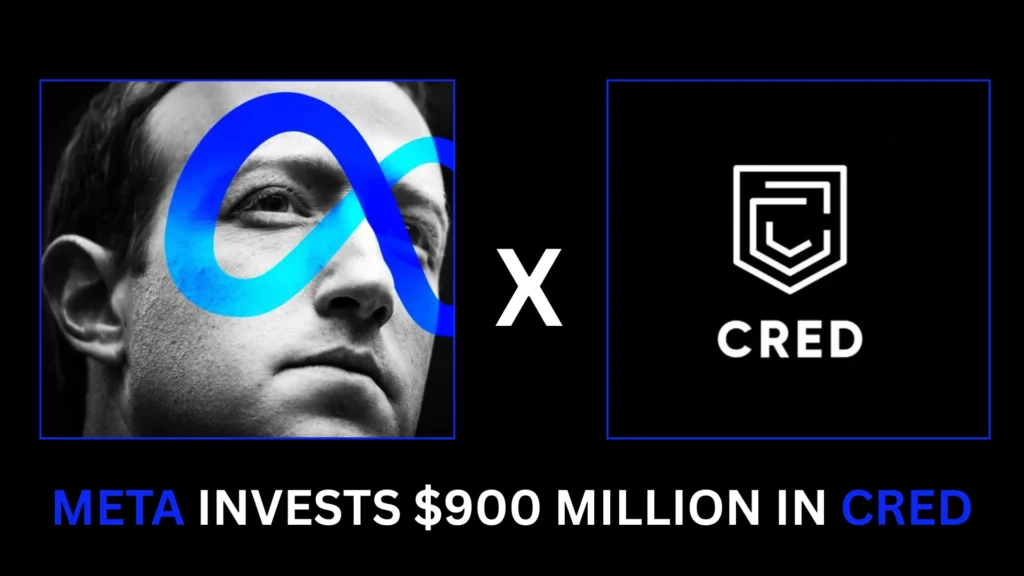
In an unprecedented action that has left the Indian startup community reeling, Meta Platforms disclosed on June 23 2026 that it will invest $900 million CRED, the Bengaluru-based fintech unicorn. As part of the deal, CRED founder Kunal Shah will join Meta as the new global head of WhatsApp, succeeding Will Cathcart who led the platform for nearly seven years. Meta acquires a roughly 20% minority stake, valuing CRED at $4.5 billion post-money.
The significance of this deal extends far beyond its dollar value. It represents Meta’s most ambitious bet yet on transforming WhatsApp into a financial super app, it signals renewed global confidence in Indian fintech, and it could reshape the competitive dynamics of India’s rapidly growing digital payments market. For Indian startups and investors alike, this is a moment that demands attention.
What Is the Meta–CRED Deal?
Deal Overview:
Meta Platforms is investing $900 million in CRED through a Series H funding round, acquiring a minority stake of approximately 20%. The deal prices CRED at $4. 5 billion post-money, a significant increase from its previous valuation of $3. 5 billion in a 2025 funding round, yet it remains lower than its highest-ever valuation of $6. 4 billion achieved in 2022. Importantly, the transaction will include both new capital infused into CRED and purchases of existing shares from current investors.
Under the terms of the agreement, Meta will not receive a board seat in CRED, nor will it gain access to CRED’s customer data. This is a critical detail: Meta’s stake is a financial and strategic investment, not a data acquisition play. Miten Sampat, who has led strategy and finance at CRED since 2020, will step in as interim CEO as CRED’s board evaluates a longer-term leadership structure in its journey toward an eventual IPO.
Why the Deal Is Making Headlines
Three factors make this deal exceptional. First, the sheer size of the investment makes it one of the largest single fintech funding events in India’s history. Second, it signals Meta’s renewed and intensified focus on India — WhatsApp’s largest market with over 500 million users — after years of struggling to monetize its massive Indian base. Third, the personnel move of bringing Kunal Shah, one of India’s most respected fintech entrepreneurs, into WhatsApp’s top leadership role, is being interpreted as a declaration of intent: Meta is serious about payments, and it’s going all-in on India to prove it.
Why Did Meta Invest in CRED?
Access to India’s Affluent Consumer Base:
CRED was never designed to be a mass-market product. Founded in 2018 by Kunal Shah, the platform specifically targets India’s creditworthy, high-income consumers who pay their credit card bills on time. With around 17 million monthly users who process more than 40% of India’s total credit card bill payments, CRED has carved out a premium niche that is extraordinarily valuable for advertisers, financial product partners, and, crucially, for WhatsApp’s ambitions in commerce and business messaging.
Growing Fintech Opportunity in India:
India’s digital payments ecosystem has exploded in recent years, powered by the government-backed Unified Payments Interface (UPI) which now processes billions of transactions monthly. Yet despite this boom, WhatsApp Pay has remained a minor player against dominant rivals like PhonePe (backed by Walmart) and Google Pay. By investing in CRED and bringing in Shah, Meta is positioning itself to compete more credibly in a market that is still far from saturated, particularly in premium lending, wealth management, and insurance distribution.
Strategic Expansion Beyond Social Media:
Meta’s core business — advertising revenue — remains dominant but faces growing pressures. The company has been actively seeking new revenue streams, including subscriptions, business messaging, and commerce. CRED’s expertise in financial services and its trust-based ecosystem provides Meta with a credible bridge into financial services, a sector with enormous and relatively untapped monetisation potential on WhatsApp’s platform.
Potential AI and Financial Services Integration:
Meta has signalled that Shah’s priorities at WhatsApp will include growing revenue through advertising, subscriptions, and AI-powered services. The convergence of AI and fintech is a natural frontier — from AI-driven credit scoring and personalised financial product recommendations to automated business payment flows. Shah’s deep experience building trust-centric financial products could prove invaluable in shaping how AI tools are integrated into WhatsApp’s payment and business services.
Read Also: Meta 8,000 employees layoffs reason?
What the Investment Means for CRED
Accelerated Product Development:
A $900 million infusion provides CRED with substantial firepower to accelerate product development across its growing suite of financial services. CRED has already expanded well beyond its original credit card bill payment origins into personal lending, merchant payments, insurance, and wealth management tools. With the injection of new funds, the company will be able to invest at a more aggressive pace in technology infrastructure, artificial intelligence, cybersecurity, and customer experience improvements.
Expansion Into New Financial Services:
CRED now manages over $2. 5 billion lending assets for partner financial institutions and has become profitable a very rare feat among the fintech unicorns in India. The fresh funds might allow CRED to intensify its footprint in wealth management, ramp up its insurance distribution business, and even introduce new business financial services products, thereby creating a wholesome ecosystem around its well-off member base.
Strengthening the Position Relative to Competitors:
Razorpay, PhonePe, Paytm, besides a number of lending and wealth management startups are, in fact, competing for the same digitally savvy consumer segment. With Meta not just as a strategic backer but also a much higher valuation behind it, CRED can be said to have acquired considerable credibility and financial muscle as well. This enhanced standing may help CRED in attracting better financial institutions that can partner with it.
Increased Investor Confidence:
Having Meta as an investor is a powerful signal to domestic and international venture capital. CRED’s board has indicated that it is working toward an eventual IPO, and the Meta investment strengthens its position considerably. The deal validates CRED’s business model and its path to profitability, potentially making it easier to attract further institutional investment and set a compelling valuation narrative for a future public offering.
Read Also: ” Snap layoffs 1,000 employees in 2026 “
The Meta–CRED Deal’s Impact on India’s Startup Ecosystem
A Positive Signal for Global Investors:
A single write-off check of $900 million by a company like Meta to an Indian startup, is enough to convey a strong message to global investors that India’s technology ecosystem is growing and there are opportunities at world-class level here. Also, this deal that has been made by Meta is a follow-up on the $5. 7 billion investment in Jio Platforms that was made in 2020, This way, strengthening a pattern of serious long-term commitment to the Indian market.For the broader startup community, this kind of signal can unlock pipeline capital that might otherwise stay on the sidelines.
More Capital for Indian Startups:
Large deals create ripple effects. When a marquee transaction occurs in a sector, it tends to attract follow-on investors who want to participate in the ecosystem’s growth. Indian fintech companies across the spectrum — from early-stage lending startups to growth-stage insurance platforms — could see increased investor interest and improved access to capital in the wake of the Meta–CRED deal. The heightened attention could also improve valuations and deal terms for Indian founders in fundraising conversations.
Fintech Sector Gets a Major Boost:
Fintech has long been one of India’s most vibrant startup sectors, but it has also faced headwinds: regulatory caution, questions around profitability, and a global funding slowdown. The Meta–CRED deal arrives at a moment when the sector needs a confidence boost. It validates the thesis that premium financial services products targeted at creditworthy Indian consumers can achieve global scale and attract world-class investment. This could encourage more founders to build in the fintech space and more investors to fund them.
Increased Competition and Innovation:
Competition is ultimately a catalyst for innovation. As WhatsApp — armed with CRED’s fintech expertise and Shah’s leadership — pushes more aggressively into payments and financial services, incumbents like PhonePe and Google Pay will be compelled to innovate faster. Meanwhile, CRED itself will have more resources to launch new products and features. The net result for Indian consumers could be better financial products, more competitive pricing, and a richer ecosystem of digital financial services.
What This Means for Meta’s India Strategy
Strengthening Presence in India’s Digital Economy:
With its market of over 500 million users, India is by far the largest market for WhatsApp, which makes it an incomparable live lab for product innovations. But despite this scale, Meta has not fully monetised its Indian footprint. The CRED investment, combined with the appointment of Shah, represents Meta’s most decisive effort yet to translate user scale into financial services revenue. Besides, in June 2026, Meta revealed its collaboration with Reliance to set up a 168-megawatt power plant in Jamnagar Gujarat which is another indication of its solid ties to India.
Beyond Facebook, Instagram, and WhatsApp:
The CRED deal mirrors Meta’s broader strategic playbook: invest in an outside company, recruit the founder into a senior leadership role, and gain capabilities without a full acquisition. Meta used the same approach with Scale AI, investing more than $14 billion and bringing founder Alexandr Wang in to lead its AI efforts. In India’s regulatory environment — where data localisation rules and foreign ownership restrictions make outright acquisitions complicated — this minority stake strategy allows Meta to gain fintech talent and strategic influence while sidestepping regulatory friction.
Long-Term Growth Opportunities:
The long-term ambition is clear: turn WhatsApp into a payments-centric super app, modelled on what WeChat achieved in China. India’s UPI infrastructure, combined with WhatsApp’s ubiquitous reach and CRED’s premium consumer expertise, creates a potentially formidable combination. If Meta succeeds, WhatsApp could evolve from a messaging platform into a platform where hundreds of millions of Indians manage their financial lives — a prize worth far more than $900 million.
Challenges and Risks to Watch
Regulatory and Compliance Issues:
India has a lot of rules for services. The Reserve Bank of India and the National Payments Corporation of India keep an eye on things. This can make it tough for WhatsApp to get into payments and financial products in India. WhatsApp Pay has had problems with rules in India before. The new people in charge of WhatsApp will have to be very careful, with WhatsApp Pay and these rules.
Additionally, India’s data localisation requirements mean that the explicit contractual exclusion of CRED’s customer data from Meta’s reach will face ongoing scrutiny from regulators.
Fintech Competition:
PhonePe, backed by Walmart, and Google Pay have entrenched market positions in India’s digital payments space and have deep pockets of their own. Paytm, despite facing earlier regulatory challenges, retains a large user base. Competing effectively against these players will require more than capital — it will require a fundamentally differentiated product experience and a strategy to win user trust in financial transactions.
Monetisation Expectations:
With a $900 million investment comes significant expectation of returns. CRED has reached profitability, which is a positive sign, but scaling financial services profitably in a competitive market is genuinely hard. There will also be pressure on WhatsApp to demonstrate that its payments ambitions are translating into real revenue growth — both for investors and for shareholders who have watched Meta’s India bet unfold over many years.
The Final Thing:
The Meta–CRED deal is much more than a financial transaction. It is a strategic realignment: Meta doubling down on India, WhatsApp taking its most serious step yet toward becoming a financial super app, and CRED gaining the resources and validation to accelerate its journey toward an IPO. For the Indian startup ecosystem, it is a powerful vote of confidence. For Indian consumers, it could mean better, more competitive financial products delivered through platforms they already use every day.
What to watch next: How quickly Kunal Shah can reshape WhatsApp’s payments strategy, whether regulators will smooth or complicate the road ahead, and whether CRED’s new leadership under Miten Sampat can sustain the company’s momentum toward its eventual IPO. One thing is certain: India’s fintech story just got a lot more interesting.
Frequently Asked Questions
Q1. What is the Meta–CRED deal?
Meta is putting a lot of money into the company CRED. They are spending $900 million on this investment. This means Meta now owns about 20% of CRED. The value of CRED is now around $4.5 billion because of this investment.
Q2. Why is Meta investing in CRED?
WhatsApp wants to become a part of the digital payments and fintech sector in India. This sector is growing fast in India. WhatsApp wants to make its presence deeper in this sector.
Q3. Who is Kunal Shah?
Kunal Shah is the founder of CRED who will now lead WhatsApp globally as Meta’s new head of the platform.
Q4. What is CRED’s new valuation?
CRED is valued at $4.5 billion post-money following Meta’s investment.
Q5. Will Meta access CRED’s customer data?
No — the deal explicitly excludes any access to CRED’s member data.
Q6. Is CRED profitable?
Yes, CRED has reached profitability and manages more than $2.5 billion in lending assets.
See Also
Related Posts

Who Is Kunal Shah? The Entrepreneur Behind CRED’s Rise
He dropped out of NMIMS, sold FreeCharge for ₹2,800 crore,...
Read More
Meta Invests $900 Million in CRED: What the Deal Means for India’s Fintech Future
Meta just bought a 20% stake in CRED for $900M....
Read More
SpaceX Buys Cursor AI for $60 Billion: What the Deal Means for Developers
Elon Musk's SpaceX is acquiring Cursor AI for $60 billion...
Read MoreCategory
Recent Posts

How to Start Budgeting: Top 10 Methods for Beginners in 2026
From the 50/30/20 rule to automating savings — these proven...
Read More
Why Big Tech Companies Are Investing in Fintech Startups in 2026
Discover why big tech companies are investing in Fintech Startups...
Read MoreWho Is Kunal Shah? The Entrepreneur Behind CRED’s Rise
He dropped out of NMIMS, sold FreeCharge for ₹2,800 crore,...
Read MoreMeta Invests $900 Million in CRED: What the Deal Means for India’s Fintech Future
Meta just bought a 20% stake in CRED for $900M....
Read More
Vedant
Vedant is the SEO and content writing expert having more than 4 year’s experience and founder of Nex Bloggy, where he shares insightful and easy-to-understand content across astrology, technology, finance, health, and entertainment. With a strong focus on research-driven writing, he aims to simplify complex topics and deliver valuable information that helps readers stay informed and make better decisions. Read more about Vedant…